Sustainability / Waste Management

Responsible Waste Management

PT. B.S Indonesia implements waste management as part of its commitment to circular economy principles, operational efficiency, and ongoing environmental protection.

Waste management is not merely about disposing of trash, but about how the company integrates circular economy principles into its business model. From a sustainability perspective, waste management shows how far the company is able to control operational impacts, use resources more efficiently, and maintain environmental responsibility consistently.

Investors and stakeholders also see waste management practices as an important indicator for assessing operational risk and the company's environmental commitment. Effective waste management is therefore not only related to compliance with government regulations, but also directly connected to operational efficiency, corporate reputation, and long-term sustainability image.

Waste management reporting and monitoring are generally carried out regularly to understand the volume, type, and handling methods of generated waste. The results are then compared with internal targets and applicable legal standards, including environmental regulations such as Government Regulation No. 22 of 2021 in Indonesia, so the company can continue ongoing evaluation and improvement.

01

Circular Economy

Waste management is directed toward reducing inefficiency and improving resource efficiency.

02

Compliance

Waste management is carried out in accordance with applicable environmental regulations and standards.

03

Monitoring

Regular monitoring helps measure the volume, type, and effectiveness of waste handling.

04

Environmental Protection

Waste segregation and control are implemented to prevent pollution in the surrounding environment.

Management Practice

Waste segregation as a basic control step

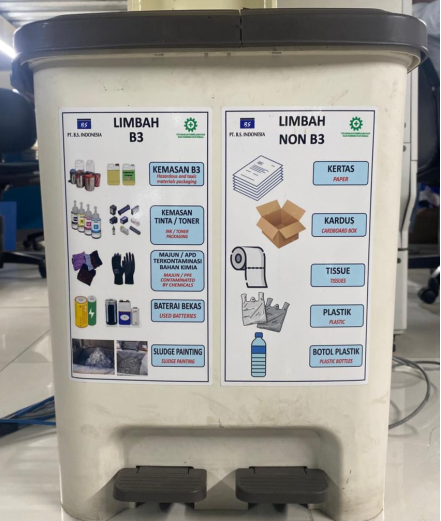
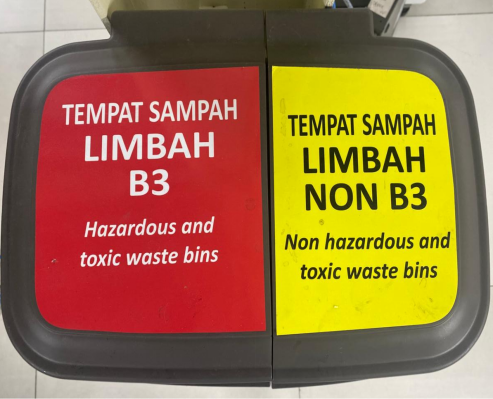
As part of PT. B.S Indonesia's commitment to environmental preservation and compliance with environmental management regulations, the company separates hazardous and non-hazardous waste. This step is important to ensure each type of waste is handled according to its characteristics and does not create pollution risks around the office or production areas.

Proper segregation also helps improve the effectiveness of waste handling, reduce the potential for cross-contamination, and support safer transportation and disposal processes. With this system, waste management becomes part of daily operational discipline that supports an orderly and responsible work culture.
Area Monitoring

Facility placement is aligned with waste sources

Based on monitoring results of waste bin facilities across the office area, non-hazardous waste categories are placed in locations that generate the most general waste, such as the canteen and workspaces. This placement helps make daily waste collection more orderly, practical, and easier to monitor.

Meanwhile, hazardous waste collection facilities are placed in production areas that have the potential to generate waste requiring special handling. This approach ensures each waste type can be separated at the source, handled according to procedure, and prevented from causing negative impacts on workplace health or the operational environment.

Hazardous and non-hazardous waste separation bins in the company area
Lid labels for hazardous and non-hazardous waste bins

Environmental Commitment

Effective waste management supports operational efficiency while strengthening the company's environmental responsibility.

Through regular monitoring, proper segregation, and regulatory compliance, PT. B.S Indonesia continues to maintain a safer, cleaner, and more sustainable working environment.

Environmental Responsibility

Disciplined waste management is part of building a more responsible industry.

Contact BS Indonesia